Here’s to the Polypropylene Makers
Six years ago, as covid-19 was rapidly spreading through the US, my sister was working as a medical resident. One day she was handed an N95 and told to “guard it with her life”, because there weren’t any more coming.
N95s are made from meltblown polypropylene, produced from plastic pellets manufactured in a small number of chemical plants. Two of these plants were operated by Braskem America in Marcus Hook PA and Neal WV. If there were infections on site, the whole operation would need to shut down, and the factories that turned their pellets into mask fabric would stall.
Companies everywhere were figuring out how to deal with this risk. The standard approach was staggering shifts, social distancing, temperature checks, and lots of handwashing. This reduced risk, but each shift change was an opportunity for someone to bring in an infection from the community.
Someone had the idea: what if we never left? About eighty people, across both plants, volunteered to move in. The plan was four weeks, twelve-hour shifts with air mattresses on the floor each night and seeing their families only through screens. With full isolation no one would be exposed, and they could keep the polypropylene flowing.
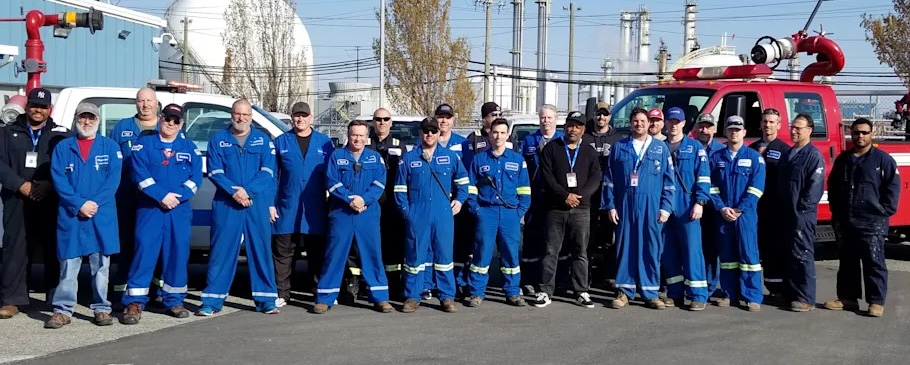
The company would compensate them well: full wages for the whole time, even when sleeping, and a paid week off after. They had more volunteers than they had space for.
I’ve looked pretty hard, and as far as I can tell no other factories [1] did this. Companies retooled to make PPE. Ford and GM converted auto plants to make ventilators and masks. Distilleries made hand sanitizer. No one else volunteered to move into their factory.
And it wasn’t emergency planners who came up with the idea, either. It was ordinary people, looking at their situation, and thinking creatively about how to do their part.
In those 28 days they produced 40M pounds of polypropylene, enough for maybe 500M N95s.
These workers were doing something critical that almost no one else could do. When people argue about higher pricing during emergencies, this is what the economics can look like: the work was needed, the plants could not run without them, and they were paid accordingly.
Notice, however, that Braskem made it possible for people to be heroes. If the workers had been expected to do this for normal wages, this wouldn’t have happened. The number of volunteers is not independent of the offer. When someone figures out a creative way to fill a vital gap in an emergency, they should get paid like it matters, because that’s how you get more gaps filled.
Their short-term impact was producing the materials for 500M masks, but I hope their long-term impact is larger: showing how in an emergency ordinary people thinking creatively about their specific situation can find solutions no one else would come up with for them.
[1] This does stretch it a little: while this is the only case I could
find for a factory, there were several utilities that did things along
these lines. Ex: 1,
2.
Comment via: facebook, lesswrong, the EA Forum, mastodon, bluesky
Braskem is a great example of how to do emergency worker housing in a pandemic. The Foxconn iPhone factory is a great example of how not to do worker housing in a pandemic.
I’m not sure if this counts as moving into a factory per se, as it was already set up as a campus, but it feels very relevant. They were not paid well, they were not kept safe from infection, and they had shortages of food.
We’ve got a project starting up at ALLFED to figure out how to scale up emergency on-site housing in future pandemics/GCBRs, and how to follow the example of Braskem and utilities that treated workers properly by keeping them well paid and well protected.
Thanks for pointing this out. Reading it made me tear up a bit. Some secret heroes here!
This would make a great story for a Youtube video.
Has anyone covered this yet? Couldn’t find it.
I’ll pitch it in the EA Youtubers group, just in case someone wants to pick it up, or keep it in mind for later, if similar opportunities arise in a future crisis.
Seems worth doing!
Update: I pitched in the EA Youtubers group, but no-one has responded (yet), so if you, dear reader, would like to be the first one making a video about this, or pitch it to your favorite youtuber, go ahead!
500M in N95 mask materials in 28 days from just 2 plants is a really massive number, that’s 17M per day!
Quick BOTEC: 50M essential workers in the US demand 10M N95 masks per day, assuming the best N95 masks on the market today have a 5-day lifecycle. Even if they demanded 50M day, if we increased the number of plants from 2 to 10 (assuming the next 8 have 50% the max capacity of the Braskem plants), this might potentially solve the meltblown bottleneck.
Updates me toward thinking meltblown polypropylene may be more capable of surge than I previously assumed.
If similar labour pre-commitments and coordination mechanisms could be secured across other PPE stages before the next pandemic, this could potentially shift the surge vs stockpile ratio more towards surge.
Note that this factory was just producing polypropylene pellets, not melt-blown fabric or masks themselves.
The pellets also last ~indefinitely if well stored (no UV, no heat, minimal oxygen, low humidity), and so are well suited for stockpiling. But you’d probably want to move up the chain and stockpile the fabric instead, or perhaps N95s themselves, or perhaps reusable respirators, …
Knew it was a bit too good to be true 🥲 Meltblown PP rolls and facepiece moulds seem like the key upstream bottlenecks to N95 / reusable respirator production.
More reason to advocate for pre-securing offshore oil rig-style labour contracts + government compliance (NIOSH) for surging PPE production.
Intuitively, advocating for private companies to maximise production and removing the friction to do so feels more tractable than advocating federal governments to stockpile +5 billion additional N95s. Ideally we should still pursue both
My understanding is that some electric and water utilities did a similar thing in the early days of the pandemic, for the same reasons.
Yup! Linked from the bottom of the post.
Also (not linked; learned about it in comments) a nursing home
Stories like this get lost because they were not loud or political, just people solving a very specific problem in front of them. That is what real crisis response usually looks like, small groups making uncomfortable choices so a system does not break. The key detail is they were treated like the work actually mattered, both in pay and in trust, which is why they stepped up. When companies recognize that kind of responsibility and back it with real support, you get solutions no top down plan would ever design.
The detail doing the most work is in your footnote: as far as you could find, exactly one factory did this. That makes Braskem less a model than a measure of the gap. What protected the N95 supply was one creative idea, eighty willing people, and an employer who happened to pay them like the work mattered. None of it was designed in, and almost none of it was reproduced.
I’d resist reading this as “the market and a few heroes had it covered,” but also the opposite reflex that what we lacked was a better central plan. The US did have pandemic plans. The thing that stayed with me from The Premonition is how little the formal apparatus mattered when it counted, and how much came from people at the margins of the system who saw further than the institutions did. Your “authorities and amateurs” point is that same tension, and Braskem is a data point for it, not against it.
So the question I’d sit with isn’t “wasn’t this heroic” or “why didn’t we plan for it,” but what institutional arrangement makes on-site continuity and supply resilience a default rather than a fluke, without designing out the thing that actually worked here: competent people improvising, trusted and paid to. The ALLFED project @jamesmulhall🔹 mentions seems exactly the right shape, turning a lucky one-off into something repeatable, compensation and trust included. COVID was a fairly forgiving test of all this; worth building the system while that’s still true.