Over the past six weeks, I had the opportunity to be part of Lens Academy’s AI Safety Risk Programme. Going into the programme, I expected something fairly typical: weekly lectures, reading assignments, discussion sessions, and perhaps a final assessment.
Instead, I found something much more thoughtfully designed.
What impressed me wasn’t only the curriculum itself, but the way the programme approached learning. Rather than treating AI safety as information to consume, Lens Academy treats it as something participants actively construct through reading, retrieval, discussion, reflection, and feedback.
After completing the programme, I found myself reflecting less on what I had learned and more on how I had learned it. I think that learning model deserves attention in its own right.
Starting with a single book
One design decision immediately stood out.
Instead of assigning dozens of disconnected papers, blog posts, podcasts, and videos, Lens Academy builds the programme around a single primary book:
If Anyone Builds It, Everyone Dies
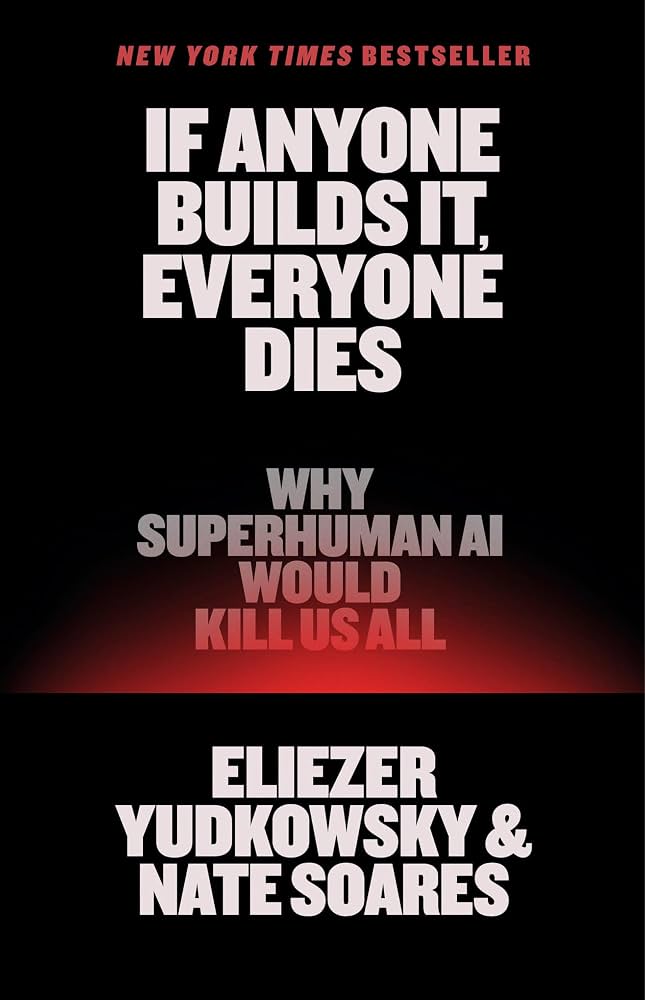
At first, I wasn’t sure whether this would feel restrictive. AI safety is a broad field, and I expected an introductory programme to expose participants to a wide variety of resources from the beginning.
Instead, I found the opposite.
Using one carefully chosen book gave the programme a clear intellectual backbone. Every week’s discussions built on ideas introduced in previous chapters rather than constantly switching between unrelated perspectives. Instead of collecting isolated facts, participants gradually built a coherent mental model of the arguments surrounding advanced AI and existential risk.
The programme supplemented the book with additional resources where appropriate, but the book remained the anchor throughout the six weeks.
Looking back, I think this was an excellent design choice. For newcomers, depth often matters more than breadth, and having a shared reference point significantly improved the quality of discussion.
The platform itself teaches
Another pleasant surprise was the Lens Academy learning platform.
Many online learning platforms simply organise videos into folders and ask students to work through them independently.
Lens Academy felt fundamentally different.
Each weekly module combines several learning components:
Reading assignments
Optional audio narration
AI-assisted tutoring through LensCoach (Lens Tutor)
Structured reflection exercises
Test Questions
Weekly discussions
Optional “Dive Deeper” sections
The platform also estimates the expected weekly time commitment, making expectations clear from the beginning. Rather than encouraging passive completion, it communicates that the programme expects consistent engagement.
That may seem like a small detail, but it sets the tone for the entire course.
Reading became an active process
One of the most interesting aspects of the platform wasn’t the reading itself , it was what happened immediately afterwards.
Every chapter followed a structured learning sequence.
Phase 1: Recall
Before looking back at the text, participants were asked to spend a few minutes writing down everything they could remember from the reading.
Not polished notes.
Not summaries.
Simply reconstructing the ideas from memory.
At first this felt unusual.
But after a few weeks, I realised it fundamentally changed how I read.
Instead of passively following the text, I began reading with the expectation that I would later need to reconstruct the arguments myself.
That small change encouraged much deeper engagement.
Phase 2: Processing
Only after the recall exercise did the platform ask a second set of questions:
What resonated with you?
What confused you?
Which claims did you doubt?
What assumptions did you notice?
This stage wasn’t testing factual recall.
Instead, it encouraged reflection.
Participants were asked to think about how the material landed, not merely whether they remembered it.
That distinction matters.
Understanding an argument and critically engaging with it are very different skills.
Phase 3: Learning Questions
Only after recall and reflection did the platform move to more traditional learning questions.
Rather than relying exclusively on multiple-choice quizzes, many questions required explaining reasoning, analysing arguments, or evaluating different perspectives.
The sequence felt intentional:
Read → Recall → Reflect → Apply
Looking back, I think this is one of the strongest aspects of the programme’s pedagogy.
LensCoach: AI as a tutor rather than an answer engine
Perhaps my favourite feature of the programme was LensCoach (sometimes referred to as Lens Tutor).
Throughout the readings, I frequently encountered unfamiliar terminology, philosophical concepts, or technical ideas.
Normally, independent learning means opening multiple browser tabs, searching LessWrong, Wikipedia, papers, or asking ChatGPT before eventually returning to the original text.
LensCoach reduced that friction considerably.
Instead of leaving the learning environment, I could ask questions directly within the platform.
Sometimes I asked for definitions.
Sometimes I asked for clarification of difficult passages.
Sometimes I wanted a concept explained in simpler language.
Sometimes I wanted help understanding why an author made a particular argument.
Rather than functioning as a search engine, LensCoach felt much closer to an interactive teaching assistant.
More importantly, it kept the momentum of learning.
I wasn’t constantly context-switching between different websites. I could stay focused on the chapter while resolving confusion as it arose.
As AI becomes increasingly integrated into education, I think this is an excellent example of how it can be used to support learning rather than replace it.
Learning didn’t stop after Sunday
Another aspect I appreciated was the cohort structure.
Before the programme began, participants were assigned to private Discord cohorts.
Initially, I assumed Discord would mainly be used for announcements.
Instead, it became an extension of the classroom.
Questions continued after sessions.
Participants debated ideas from the book.
People shared papers, articles, podcasts, and LessWrong posts.
Interesting disagreements often continued for several days after the live meeting.
The result was that learning became continuous rather than something confined to a weekly lecture.
That sense of community is particularly valuable in AI safety, where many questions remain open and discussion often matters as much as the reading itself.
Accountability partners: A simple idea that works
One feature I didn’t expect—but ended up appreciating a great deal—was the accountability partner system.
Each participant was paired with another participant for the duration of the programme.
The purpose wasn’t evaluation.
It wasn’t mentorship.
Instead, it was a lightweight commitment mechanism.
Every week, accountability partners checked in with one another to make sure they had completed the readings, stayed on track, and were prepared for the upcoming discussion session.
Initially, this seemed like a small logistical detail.
In practice, it turned out to be surprisingly effective.
Independent learning often fails not because people lack motivation, but because consistency is difficult to maintain over time.
Knowing that another participant expected me to show up prepared made it much easier to stay disciplined throughout the six weeks.
It’s a simple idea, but one that fits naturally with the programme’s broader philosophy: learning is something you actively participate in rather than passively consume.
“Dive Deeper”
Every module also included optional Dive Deeper sections.
I appreciated that these weren’t mandatory.
Participants could comfortably complete the core curriculum while those wanting additional technical depth always had somewhere to continue exploring.
That flexibility struck a good balance between accessibility and depth.
Beginners weren’t overwhelmed.
More experienced participants weren’t limited by the core material.
Feedback that rewards reasoning
Another feature I appreciated was how feedback was integrated throughout the programme.
The platform didn’t simply mark answers as correct or incorrect.
LensCoach frequently provided feedback on written responses, explaining where reasoning was strong, where assumptions could be challenged, and where arguments could be improved.
The programme also included tests and assessments that were evaluated using explicit rubrics rather than relying solely on factual recall.
That emphasis felt particularly appropriate for AI safety.
Many important questions in the field don’t have definitive answers.
Good judgement, careful reasoning, intellectual honesty, and the ability to update one’s beliefs are often more valuable than memorising facts.
The assessments reflected that philosophy.
What changed for me
The programme didn’t convince me that AI safety is important.
I already believed that before joining.
What changed was how I think people should learn AI safety.
Before Lens Academy, most of my learning came through independent reading: books, papers, LessWrong posts, research reports, and online discussions.
While that approach taught me a great deal, it also had obvious limitations.
There was no structured way to check whether I had genuinely understood an argument.
No immediate feedback when I misunderstood something.
No community regularly challenging my assumptions.
No mechanism encouraging consistent engagement.
Lens Academy approached those problems systematically.
Rather than relying on a single teaching method, it combined several complementary ones:
A carefully chosen primary text
Retrieval practice before review
Reflection before evaluation
AI-assisted tutoring through LensCoach
Weekly cohort discussions
Accountability partners
Optional deeper explorations
Rubric-based feedback
None of these ideas is revolutionary on its own.
What impressed me was how intentionally they were combined into a coherent learning experience.
Over time, I found myself reading differently.
I stopped reading simply to finish chapters.
Instead, I read with the expectation that I would later have to reconstruct, discuss, defend, and refine my understanding.
The programme also broadened my own picture of AI safety.
Final reflections
Looking back, I think the biggest lesson I learned wasn’t a specific concept from the curriculum.
It was how AI safety can be taught effectively.
Lens Academy doesn’t try to produce AI safety researchers in six weeks.
Nor should it.
Instead, it builds something more foundational.
It helps participants develop habits that good researchers rely on: reading carefully, recalling ideas from memory, questioning assumptions, engaging in discussion, seeking feedback, and continuously refining their thinking.
What impressed me most wasn’t simply the quality of the content.
It was the learning design.
As someone transitioning into AI safety, I found that approach incredibly valuable.
I’m grateful to the Lens Academy team and fellow participants for creating such a thoughtful learning environment. It’s clear that a great deal of care has gone into designing not only what participants learn, but how they learn.
For anyone considering a serious transition into AI safety , especially those who have mostly been studying independently . I think Lens Academy provides an excellent example of what a modern AI safety learning programme can look like.
I’d love to hear from others
I’m curious whether others in the AI safety community have participated in similar fellowships or introductory programmes.
Which aspects of their learning design worked particularly well? Have you seen other programmes using retrieval practice, AI tutors, structured reflection, accountability systems, or similar approaches?
I’d be interested in hearing what methods have been most effective for helping people learn and transition into AI safety.
Please check out the course here.
> Normally, independent learning means opening multiple browser tabs, searching LessWrong, Wikipedia, papers, or asking ChatGPT before eventually returning to the original text.
> [...]
> Instead of leaving the learning environment, I could ask questions directly within the platform.
Yes our philosophy is very much to integrate everything and reduce friction. How did this feel for wrt to the book, which for copyright reasons, we haven’t been able to include directly into the platform? I guess there you still had to context switch between the book and the platform?
Awesome to see your write-up! (context: I’m the founder of Lens Academy)
> Instead of assigning dozens of disconnected papers, blog posts, podcasts, and videos, Lens Academy builds the programme around a single primary book:
Yup. So, our other courses do consist of dozens of disconnected recources, but we wanted to try out an intro course with IABIED and so far are pretty happy with it. The book isn’t perfect, but provides a relatively compelling case for AI takeover risk at an introductory level.
We’ll probably be expanding this intro course to contain some different resources too, especially to provide context about the AI Safety ecosystem and possible next steps people can take.