What Questions Do Policymakers Ask About Foreign Aid?
I sit down with Lee Jae-jeong, one of the 21 parliamentarians on South Korea’s Foreign Affairs and Unification Committee. The National Assembly budget audit looms, and our conversation could impact the next year of Korea’s health aid. I walk through a 5-minute presentation (stopping intermittently for translation) about Gavi’s new malaria vaccines and why we at Coefficient Giving think so highly of them. She furrows her brow while she flips through the printed leave-behind I brought. What does she want to know?
I’ve had dozens of similar conversations with Japanese and Korean lawmakers as a representative of Coefficient Giving’s Global Aid Policy program. Our team’s goals are to grow the scale of wealthy countries’ development assistance, and direct this money to more cost-effective aid programs. Given our lean staffing model, we’re limited in the amount of direct advocacy we ourselves can do. However, after funding local aid advocacy groups in Japan and Korea, we learned that meeting with policymakers in person helps to build relationships, strengthen educational advocacy, and provide international validation for our grantees’ work.
At a time of deep cuts across major aid donors, it can be easy to imagine appropriators as heartless gatekeepers who withhold aid from those who need it. But after meeting many of the people behind the budget, I see them as trustees of society. Tasked with making decisions on hundreds of policy areas the average citizen knows little about. Overworked and lobbied from every angle. I believe most policymakers approach each issue trying to understand the wishes of the electorate, incorporating their own judgment and convictions for public benefit.
To effectively advocate for greater aid resourcing, I think it’s important to understand what political decisionmakers value. Looking through my notes over the years, here are some of the questions that policymakers most frequently ask about foreign aid:
Geopolitics
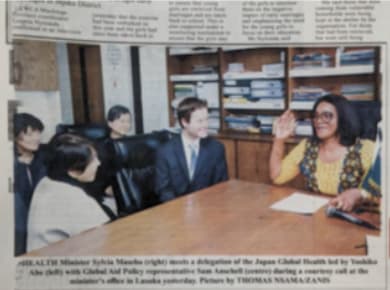
What is our country/aid agency already doing in this area? How do we compare to other countries?
What is the geopolitical significance of this program? Does this feed into China competition? Where is this project being implemented? What is the US doing in this area, and will this project provide an opportunity to strengthen relationships with ally countries?
How are our businesses[1], universities, and citizens[2] involved in the project?What proportion of commodities are procured from our suppliers? Are our citizens involved in the governance of this project?
What have other lawmakers (particularly party leaders and relevant ministers) said about this project? What is the current coalition of lawmaker support for this issue?
What does the voting public think of the project? How do you know—do you have polling data? What do specific groups (e.g., Christians, my constituents) think?
What is the basis of the financial need? Why are we expected to contribute a specific amount?
What is the minimum amount we would need to give to maintain a board seat, or continue to be a top 10 donor?
What success stories have we seen as a justification? How close are we to solving this problem, or enabling recipient self-sufficiency?
What opportunities are there to announce this at a major event (e.g., the next Tokyo International Conference on African Development)?
Values
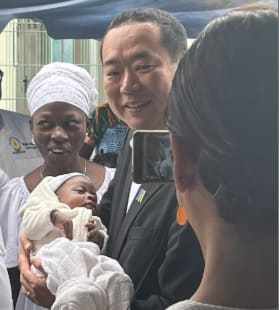
I’m passionate about X. How can we connect this to that? How does this connect to salient world events, e.g., Gaza?
What would you like me (the lawmaker) to do?[3]
How does this connect to our national history (e.g., have there been neglected tropical diseases endemic to Japan?) How does this benefit our nation’s modern issues (e.g., could drone delivery of malaria vaccines provide a model for scaling up drone delivery in rural Korea? Will the global health R&D we fund improve the health of our own citizens?)
Pragmatism
Have you spoken to working-level stakeholders (like civil servants in our aid agency)?
[Working level staff will often ask whether recipient governments are requesting the program, and how it fits into different funding lines within the aid budget.]
What evidence do you have that this is achieving development goals I value?[4] Has anyone I know seen this project firsthand? What do the international institutions I trust (e.g., CDC, World Bank) think? How are they involved?
Is your organization willing to contribute funding or time (e.g., participating in a working group) related to this project?
When I cross-reference this information with other sources, will the message be consistent? [Lawmakers would often ask this to their staffers after the meeting, and staffers would follow up.]
___________________________________________________________________________
As an aid advocate, I have a lot of room for improvement.[5] I constantly remind myself of the basics in preparation for these meetings: the ritual of exchanging business cards, the angle of my bow, seating etiquette, how to express respect through physical and spoken language, my speech cadence and word choice. I spend the flights to East Asia reading up on political history, culture, and current affairs that seasoned diplomats know in their sleep. And as much as I learn in anticipation of the questions above, I won’t be as well-equipped to inform lawmakers as a senior development practitioner with decades of experience living in a developing country.
But the field of aid advocacy is neglected; I estimate that only $1-2 is spent on advocacy for every $1,000 of Official Development Assistance disbursed. That means not every relevant political stakeholder is exposed to a steady drumbeat of support for aid, and that on the margin, even imperfect advocacy can make a difference.
Despite its modest budget, I think aid advocacy field achieved extraordinary things. To name a few:
The Gates Foundation established GAVI and the Global Fund, and mobilized sustained funding for each of their operations from dozens of donor governments. These efforts have saved millions of lives over the past 25 years.
Jubilee’s turn-of-the-century campaign enabled over $100 billion in debt relief for the poorest countries through a global grassroots movement led by Pope John, the Uganda Debt Network, Bono, Senator Jesse Helms, and evangelical Christians.
NGOs like FRIENDS, the ONE Campaign, RESULTS, United to Beat Malaria, and Malaria No More have preserved congressional support for PEPFAR and the President’s Malaria Initiative for over two decades, enabling the disbursement of over $100 billion in US bilateral support for HIV and malaria.
I hope this piece supports other advocates in providing lawmakers with the information they need to champion aid. In light of recent political rhetoric framing aid as “waste, fraud and abuse”, getting advocacy right has never felt more important. And as I was wrapping up my conversation with parliamentarian Lee Jae-jeong, she reminded me of USAID administrator Samantha Power’s FY25 testimony before Congress. I think it’s worth quoting in full here:
“In the lobby of the Republic of Korea’s development agency — their equivalent of USAID — they display an old bag of flour from the 1940s, marked with the words: ‘From the American People.’ It’s a reminder of how the U.S. supported them when they were one of the poorest countries on the planet to fight hunger and disease and kickstart economic growth. Today, of course, South Korea is one of the world’s richest nations — and last year spent nearly four billion dollars providing aid to other nations. This year they plan to spend nearly five billion.”
- ^
One advocacy framing that has been resonant among Korean aid appropriators is comparing Korea’s share of financial contributions to the Global Fund, GAVI and CEPI with the scale of Global Fund/GAVI/CEPI’s spending that goes through Korea’s biopharma industry.
- ^
E.g., on a learning trip I joined, lawmakers were asked how a maternal and child health organization could achieve Japan’s foreign aid goals. The lawmakers said they hoped to see more Japanese voices represented at the org, then requested funding to cover the cost of these staff members.
- ^
Note, sometimes lobbying laws prevent advocates from making direct requests. It’s important to be prepared to answer this question in a compliant and productive way.
- ^
In my experience, lawmakers are mainly interested in “what total results has this project achieved?”, rather than “what level of DALYs-per-dollar cost-effectiveness does this project achieve?”
- ^
My CV reads: Poker Dealer (2019-2022), Operations Assistant (2022-2024), Aid Policy Aspirant (2024-Present).
Some excellent reflections here. Across all advocacy, aid, animal welfare and especially AI, I often see errors in understanding the actual incentives and interests of those with power in Government.
A lot of time is also spent advocating to people who have little to no tangible influence. Which leads to organisations claiming they’ve delivered a lot of “direct advocacy” but actually they’ve just spoken to a lot of people, very few of which have the autonomy or power to enact any change.
As someone who worked at the very centre of the U.K. government for c.5 years on international development and finance policy, and time on AI policy (including roles as Head of Development Policy and Senior Policy Advisor for ODA Strategy and Spending at HM Treasury, and Head of Strategy at the CDEI), I’m always happy to share my thoughts directly if ever helpful.
I particularly liked hearing the extensive list of concerns raised by the Korean representatives that you mentioned.
This makes a good case for research organizations (Givewell, etc.) to help identify and prioritize interventions and opportunities in addition to those that are the most demonstrably impact/cost-effective.
I’ve made the argument that donations are a sort of two-sided market catering to both the beneficiaries and the donors, and there may be charities/interventions that are particularly effective when we think about the net benefits to both, or when we consider willingness to donate.
There’s an even more straightforward case for ODA/Foreign aid. We may want to identify, prioritize among, and promote interventions that will be particularly politically appealing to the donor country governments and citizens, even if these are somewhat less impact/cost-effective in a strict sense.
E.g., one often hears that requiring food aid to be purchased from U.S. farmers makes it far more costly. However, this provides a natural constituency.
There may also be some interventions that harness particular cultural and religious affinities, e.g., “Helping educate Christian girls in Muslim countries” or some such. We may find this type of spin particularly distasteful in some ways, but the benefit may outweigh the cost in terms of making aid (and charity) politically appealing.
Executive summary: The author argues that effective foreign aid advocacy requires understanding that policymakers evaluate aid through geopolitical, value-based, and pragmatic lenses, and that even modest advocacy can influence decisions because the field is under-resourced.
Key points:
The author’s experience meeting Japanese and Korean lawmakers suggests policymakers are not indifferent but act as overburdened trustees trying to balance public opinion, judgment, and competing demands.
In-person engagement helps build relationships, reinforce local advocacy, and provide international validation despite limited staffing capacity.
Policymakers frequently ask how a proposed aid program fits within their country’s existing efforts and how it compares to other donors.
They assess geopolitical implications, including alignment with allies, competition with China, and opportunities to strengthen international relationships.
They care about domestic benefits, such as involvement of national businesses, universities, and citizens, and procurement from local suppliers.
They consider political feasibility, including positions of party leaders, coalition support, and public opinion backed by polling or constituency views.
They scrutinize funding justification, including why a specific contribution is needed and thresholds for maintaining influence (e.g., board seats or donor rank).
They look for evidence of success, progress toward solving the problem, and narratives of impact or recipient self-sufficiency.
Value-driven questions include how aid connects to lawmakers’ personal priorities, national history, current events, or domestic policy benefits.
Pragmatic concerns include whether relevant bureaucrats support the program, whether recipient governments request it, and how it fits budget structures.
Policymakers prioritize credible evidence and endorsements from trusted institutions, and check for consistency across sources.
Aid advocacy is highly underfunded (roughly $1–2 per $1,000 of aid), so even imperfect advocacy can have marginal impact, as illustrated by past successes like GAVI, debt relief campaigns, and sustained US global health funding.
This comment was auto-generated by the EA Forum Team. Feel free to point out issues with this summary by replying to the comment, and contact us if you have feedback.