High-impact projects fighting biodiversity loss
Cross-post from the EcoResilience Initiative blog.
Recently we highlighted precision fermentation as our top biodiversity intervention due to its potential to permanently reduce deforestation within 5-10 years. The fact that it is currently underfunded, is highly scalable, is at a stage with high leverage, and could have a massive global impact makes it stand out above other methods to reduce future biodiversity loss. But within the domain of “precision fermentation” where is the best place to send donations? What efforts within this industry are most targeted towards biodiversity preservation?
Terra Bioindustries is doing exactly the right work, but they’re not set up for donations at this time. If you are looking for a place to donate right now, you can give to the Good Food Institute here, which supports the broader field.
How we Chose: Current Bottlenecks
There are several important blocks holding back the development of precision fermentation into a dominant food source. Here is a well-composed list of the current unsolved obstacles. (Briefly, they are: sugar feedstock, microbial strains, bioreactors, fermentation processes, valorization, and downstream processing.) Sugar feedstock may be the biggest one—half the price of operation for precision fermentation is from sugar input. And sugar demand is going to rise to more than double current global production according to Synthesis Capital.
Particularly for biodiversity, removing the need for sugar crops would reduce conversion of biodiverse areas to cropland due to reduced cattle and cattle feed production. Precision fermentation is a net positive for global extinction reduction, even with sugarcane feedstock. This holds true across all levels of market penetration—it causes positive land use change for biodiverse continents. Still, sugarcane is currently mostly grown in India, Brazil and Thailand—and if demand increases, it risks expanding to other tropical regions[1]. This is a biodiversity threat we can foresee and avoid, while also increasing the speed that precision fermentation expands.
To make massive amounts of sugar, it is important to use a plentiful and cheap resource, and a similarly low-cost process. Beating current sugar crops is a tall order, but it will need to happen to compete with other protein sources. Here is Good Food Institute’s deep dive on feedstock production. Agricultural waste is the prime target here, primarily because of its size.
The Contenders
A few companies are working on sugar yields—Terra Bioindustries in particular is doing exactly what we are looking for—they are isolating sugar from ag-waste (corn stover and brewers spent grains). Other important actors are: Hyfé, which is producing low-cost sugars from water waste. And Fibenol is producing sugars from wood-waste[2]. Pow.Bio is another interesting company, with their “continuous fermentation” technology halving costs[3].
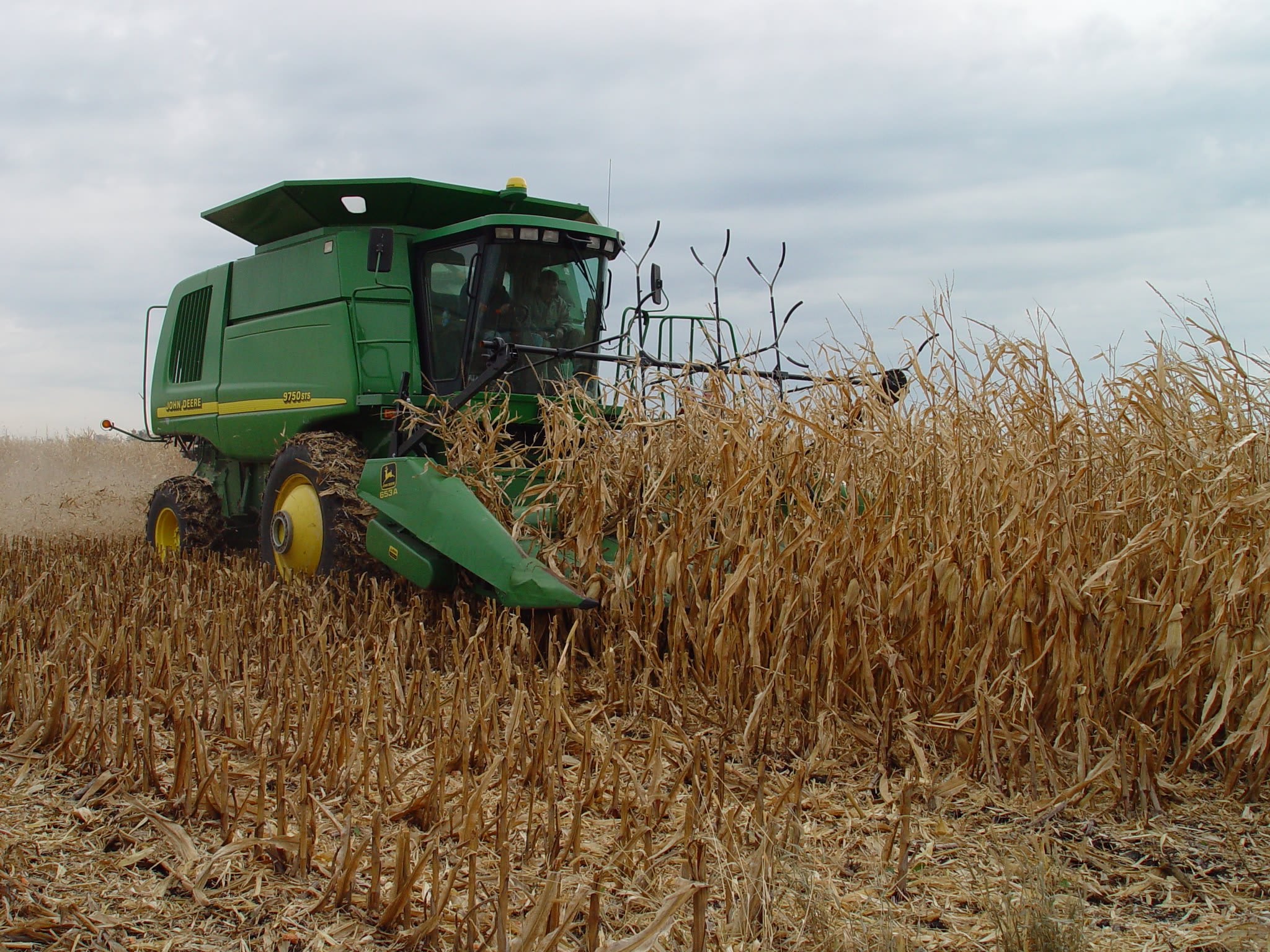
Terra Bioindustries’ direction is most exciting to us. Their goal is mass production, not expensive, specialized, small batch proteins. They are producing both sugar from ag-waste, and mycoprotein. They estimate that their protein flour will cost more than most soy protein but less than most pea protein. Their mycoprotein is “incomplete”—this means it is missing one of the nine essential amino acids (specifically: lysine). Their more important project from our perspective is refining sugar from corn stover and brewers spent barley grains. Corn stover is especially good, because it is the highest volume ag-waste. Both protein and sugar are valuable, but for advancing precision fermentation, it is the work on sugar that is most exciting to us at ERI.
There are some drawbacks to Terra Bioindustries sugar production process. Their sugar, “recyclose” contains both glucose and xylose. Pure glucose (C6 sugars) is desirable for fermentation. Xylose (C5 sugars) is much less accessible, and including xylose can slow down the process of fermenting. To be clear, producing a mixture of C5/C6 is typical for ag-waste feedstocks; it is an unsolved issue. One proposed solution is engineering microbes to use C5. This would help precision fermentation be more sugar-efficient, but optimizing microbe strains to produce protein already has many constraints. Using microbe strains which are already optimized for other traits is crucial to bringing costs down and improving production efficiency. Terra Bioindustries says that their sugar “recyclose” is indistinguishable from glucose for some precision fermenters. But they may be testing with microbe strains that are capable of digesting C5 xylose sugars.
Despite these drawbacks, we believe Terra Bioindustries presents a transformative opportunity. Their goals closely match our strategic priorities for advancement in precision fermentation biotech. There are few other companies or labs working on this specific problem. At their current stage, funding would have outsized impact—they are scaling production to demonstrate commercial viability by 2027 and are looking for $5 million to reach this milestone. Last year they came in 6th out of 1000 entries to The Livability Challenge. Early-stage investment now could determine whether they accelerate to commercialization or are forced to end their development trajectory altogether. Their performance has a chance to kick-start ag-waste feedstocks as a viable option, bringing the costs down for precision fermentation and preventing tropical forest loss from happening.
Please note, that this is only an outside view: We haven’t checked with the organizations about their situation, eg. if they already have secured enough funding, or how exactly are their expectations for the future. To really make a reliable donation recommendation, we should also check that part and form a well-informed opinion on their team and plan. But that takes more time and work. This is how far we got for now.
Another limiting factor is that we aren’t a fund, so there’s not much we can promise to them in exchange for their time and potentially secret data.
Recent Breakthroughs
A few researchers are also working on sugar yield science. NREL has a division with several top scientists working on the problem.
In particular Xiaowen Chen, now of the University of Minnesota, recently participated in a breakthrough where their process using corn stover might produce sugar at 28 cents/lb (low-end estimate). For comparison global sugar price varies from 10-25 cents/lb, and is higher (35 cents/lb) in protected markets. This is a cutting edge development, published July 2025, 4 months ago.
Hongzhang Chen of the Chinese Academy of Sciences is working on some low-cost methods to break down lignocellulose (plant matter) to free up the sugars more easily using “steam explosion.” Steam explosion is probably more cost effective than specialized enzyme mixes.
Jake Lindstrom at the FDA also studied sugar yield from fast pyrolysis.
Donate Now?
Unfortunately we don’t know of a way to easily donate directly to the above impactful initiatives. We at ERI want to make it easy to support this groundbreaking work, and will do what we can to provide access to interested donors as soon as we are able. Any updates will be posted here. If you are a big donor and want to take initiative, you can contact Terra Bioindustries by reaching out to Rebecca Palmer directly or using their contact form. Alternatively, you can reach Xiaowen Chen here, Hongzhang Chen here, and Jake Lindstrom here.
However, if you just want to donate today, an easy way to do so is to give to the Good Food Institute. The main reason to do so is that they are trying to funnel money, talent, and information to where it will bring alternative proteins to mass adoption[4]. We penciled an estimate that every $6,800,000 given to the Good Food Institute will result in one more species being saved from extinction in the next 200 years. (If you donate, we request that you add a comment mentioning ERI in your donation or email us or tell us you donated, so we can track our effect. And thank you for improving our future!)
The main caveats are that the Good Food Institute is not directly concerned with biodiversity consequences, and is not prioritizing transitioning away from sugar-crop feedstocks. They are not directly supporting Terra Bioindustries nor the other scientists I have mentioned here.
Good Food Institute does support ag-waste processing including Hyfé in a general way, although they prioritize other areas. We were able to rapidly gain in-depth understanding of the industry, key bottlenecks and leverage points using their documentation. They connect scientists, companies, funders, and provide comprehensive and accurate reports which inform decision-making. They are pushing alt-proteins forward and shortening timelines. Without their work, the field would be less informed, connected, funded, and much more neglected. They also have a grant program which channels money where they believe it will most effectively bring alternative proteins to mass adoption. For further evidence see Giving Green’s 2025 analysis (recently released!), Animal Charity Evaluator’s 2023 analysis, and Charity Entrepreneurship’s 2025 recommendation.
Good Food Institute has a donate button here. (Thank you for making a difference!)
Please consider sharing this analysis with others interested in effective giving, or who want to learn about high-impact conservation interventions.
Want to help EcoResilience Initiative?
Share—Connect us with funders—Connect us with collaborators ubscribe to our newsletter—Volunteer
- ^
I earlier mentioned “lock in” for sugar crops. Now that I have researched more, I see that the sugars from ag-waste are not insurmountably different from cane sugar. This makes me less concerned about lock in effects. Of course the supply chains still have a lag-time, and the strains for precision fermentation might be different, but it’s not as fundamental a difference as I originally feared.
- ^
Wood waste is about 10x less abundant than ag-waste. Sugars from waste water are much easier to harvest, but 20x-30x less abundant and cannot be centralized the way ag-waste can be centralized. As a side note, research into biofuels is essentially the same pathway—taking ag-waste to cheaply create sugars which can be fed to microbes to generate ethanol/biodiesel/biomethane byproducts. The only difference is what the microbes are producing—ethanol or protein.
- ^
Pow.Bio and Hyfé were Synthesis Capital’s choices.
- ^
Growing the field and bringing alt proteins to widespread adoption is arguably more important for biodiversity than shifting feedstocks to ag-waste within precision fermentation.
I made a similar comment here so I wont re-hash all of it but I still haven’t seen a compelling case for caring about biodiversity. I dont want the EA community to be closed off, especially to people who are trying to do good in the world, but I think there needs to be a much stronger reason to care about biodiversity inherently. Otherwise, it feels hard to distinguish this from high impact projects to improve the Toronto Raptors and talking about basketball analytics.
I don’t think we should care about biodiversity inherently. But it could be instrumentally valuable to protect large areas of nature until we have a much more detailed understanding of the species that are out there—and the potential food sources and medicinal compounds etc that could be valuable to humans and animals. My intuition is that the best interventions in this area will fall well short of the best interventions in other cause areas—but would still be a big step up from improving a basketball team!
I agree with the first half of your comment. Do you think that the EA community (or the EA Forum) should solely focus on cause prioritisation though?
I feel excited about scope sensitive decision-making and evidence-based prioritisation being used at various levels of abstraction/concreteness, e.g. cause prioritisation, intervention prioritisation, organisation prioritisation.
I welcome/encourage this being done carefully and well (and discussed on the Forum) even if I disagree with someone’s prioritisation at another level of abstraction, and I don’t think we should expect someone to justify their prioritisation at other levels.
I.e. I think this is a cool post, even though I don’t prioritise biodiversity and the post doesn’t explain why the authors prioritise it.
We’re working on it! A quick synopsis of the more fleshed-out argument I’m hoping to post soon on the foundational philosophy: It seems oddly universal that people to care about nature. For another it seems like the sort of scarce resource (like historical artifacts) that future humans will value. I think we will place great value on it after we reach takeoff, post-scarcity, etc. Furthermore I think that a variety of experiences existing is better than a world full of similar experiences.
A portion of the philosophical basis you are looking for was recently posted on the EA forum (it was one of the winners of the Essays on Longtermism competition!). The essay illustrates the value of “now-or-never” preservation and explores to what degree information is valuable to future generations. The essay suggests that preservation of species themselves is valuable but not practical compared to documentation. I think there are practical actions we can take to preserve species, but our second recommended intervention was biobanking for the reasoning given in the essay. The essay also touches on the concern of arbitrariness.
For context, we’ve never said that extinction is an x-risk or otherwise a top-priority cause area. But I’m a believer in big-tent EA. In my view lots of things like improving housing policy or etc are good, even if not maximally good compared to the most-important cause. I certainly don’t want to take people off of x-risk work, but I think this still falls under the Effective Altruism umbrella.
There’s lots of environmental conservation money being spent. People value something they label “nature”, and it seems good for people to get more of what they want without being confused, counterproductive, economically destructive, etc, as so much of the environmental movement is. I also think its important to work on clarifying what exactly they/we are valuing. I hope to contribute on that front as well.
So, yes, very important, and we’re working on it!
I’m pretty worried about this because I think most wild animals have bad lives, and so increasing their numbers is very bad https://benthams.substack.com/p/against-biodiversity?utm_source=publication-search
Hi, thank you for voicing this concern. I read your recent post, “Rewilding Is Extremely Bad.”
Personally, I doubt that most wild animals have negative lives. (informed by analogy to most of our own history of subsistence-level survival, and my doubt that they would consider their lives to have not been worth living). I also don’t believe that total hedonic utilitarianism is a complete frame for thinking about this. I think it is important to factor in people’s and animals’ preferences for continued existence. Mostly I think we just don’t know much about this question overall. I do think we should care about this fundamental question and certainly do what is in our power to improve the lives of other beings.
I think you may have gotten the wrong impression from my use of “biodiversity.” It would be understandable to assume that I want to maximize Earth’s total biomass / total natural land area / number of wild animals, or something like that. I’m actually mostly interested in preserving the diversity of life that has evolved on Earth, such as by avoiding species extinctions. I think there are several good reasons to do this, such as to provide the far future with valuable information that would otherwise be lost, potentially fulfill uplift-style moral obligations we may have towards nonhuman animals, and generally keep our options open.
Preserving natural land tends to be a tractable, robust, large scale way to prevent species extinctions. But there are other biodiversity interventions that work with very small numbers of individuals, like seed banks or analogous “insect zoo”, or even zero individuals, like biobanking tissue samples with the aim of de-extinction in a utopian future world.
Perhaps we could both celebrate something like a well-designed insect zoo—where we care for many small populations of insects, work toward better understanding their many different desires, elevate the value of their lives for more to see, and preserve a wide variety of life forms into the future. There are probably also a variety of biodiversity-enhancing measures that would simultaneously boost animal welfare. Unfortunately which interventions are good depend a lot on figuring out the proper value of complex vs simple animals and how far into positive or net-negative territory different animals are. I hope to write up a list of these types of mutually beneficial interventions.
Thanks!
I don’t think the analogy with subsistence humans is a good one because the basic argument for net negative animal welfare doesn’t apply to them. The basic argument is: most animals have very short lives that culminate in a painful death, and a few days of life isn’t enough to recoup the harms of a painful death. This doesn’t apply to long-lived hunter-gatherers. Fwiw, I don’t think it applies to animals either—it seems plausible that elephants mostly live good lives, for example. But the most numerous animals are worms, then insects, then fish, then amphibians, then reptiles—nearly all the most numerous animals have bad lives.
I don’t think hedonic utilitarianism is a complete frame either—I’m an objective list theorist fwiw, but I don’t think that it has huge implications because animals don’t have many significant non-hedonic goods. I don’t think nature has intrinsic value, but even if I did, this would be outweighed by the staggeringly large amount of suffering that exists even in small plots of lands (hundreds of bugs per square feet). As I said in that piece, I think even pretty small chunks of land could contain extreme suffering, so this probably swamps whatever intrinsic value nature might have.
I agree that biodiversity isn’t automatically the same as increasing ecosystem productivity. In fact, I’d generally tend to support preserving herbivores, as they lower plant populations—so we could find common ground there. I’m skeptical about carnivores generally, though depends on the detail. I’d also be skeptical of insect zoos because those might be used to argue for preserving nature. I saw your recent post where you describe precision agriculture which would prevent conversion of nature into farmland. I find this very alarming! I think farmland has fewer arthropods!
Want to come on the podcast to discuss more?
Given the focus here on companies, rather than non-profits, I wonder if this should be framed in terms of investments rather than donations. It seems like the companies mentioned aren’t easy to invest in.
One option here is Agronomics. This is an investment company that trades on the London Stock Exchange, and has a portfolio of over 20 companies, including 5 that focus on precision fermentation (as well as several that are ‘fermentation derived’, and others that work on cultured meat):
https://www.agronomics.im/portfolio/
I don’t know how this compares to donating to the Good Food Institute. I expect GFI’s work benefits many more companies working in the sector by influencing government regulation. On the other hand, Agronomics promises a potentially large return on investment.
(disclaimer: I own shares in Agronomics)
Executive summary: The EcoResilience Initiative (ERI) argues that precision fermentation—especially efforts to replace sugar-crop feedstocks with agricultural waste—offers a scalable, underfunded, and high-leverage way to reduce deforestation and biodiversity loss, with Terra Bioindustries identified as the most promising actor though currently not donation-ready; donors can meanwhile support the Good Food Institute to advance the broader field.
Key points:
ERI identifies precision fermentation as its top biodiversity intervention because it could curb deforestation within 5–10 years and remains underfunded and highly scalable.
Sugar feedstock is the main cost bottleneck, accounting for about half of production costs; replacing it with ag-waste could prevent cropland expansion in tropical regions.
Terra Bioindustries is developing sugar (“recyclose”) from corn stover and brewer’s grains and mycoprotein, aligning closely with ERI’s priorities though facing technical challenges with mixed C5/C6 sugars.
Terra Bioindustries seeks $5 million to demonstrate commercial viability by 2027 and ranks 6th out of 1,000 entries in The Livability Challenge, suggesting high potential impact.
Other actors include Hyfé (water-waste sugars), Fibenol (wood-waste sugars), and Pow.Bio (continuous fermentation).
Recent breakthroughs include Xiaowen Chen’s 2025 process producing sugar from corn stover at 28 ¢/lb, and Hongzhang Chen’s “steam explosion” and Jake Lindstrom’s fast pyrolysis research.
Direct donations to these initiatives are currently difficult; ERI recommends interim donations to the Good Food Institute, estimating $6.8 million per species saved over 200 years.
GFI accelerates alternative protein adoption through research, funding, and coordination but is not biodiversity-focused or directly funding Terra Bioindustries.
This comment was auto-generated by the EA Forum Team. Feel free to point out issues with this summary by replying to the comment, and contact us if you have feedback.