LeBron James just got off the escalator to nowhere.
The Decision, The Decider, The Desiderata: what to make of a living legend taking the minimum allowable salary? Is there more to life than salarymaxxing?
From The 1001, the EA sports blog
LeBron James just got off the escalator to nowhere.
The Decision, The Decider, The Desiderata: what to make of a living legend taking the minimum allowable salary? Is there more to life than salarymaxxing?
From The 1001, the EA sports blog
“Blogs have shaped our philosophical worldviews, found us careers and friends, and changed our lives. There’s a good chance that a great blog of yore is the reason you’re reading this right now.”
Amen.
Is Thomas Tuchel deluded or what?
“If you believe we should be burning witches at the stake, you’re a full crank. If you believe we should be segregated by race, you’re somehow a former crank. If you believe we should be factory-farmed by species, you’re a future crank.
“Some cranks are harder to spot. When the winner of one game says they were lucky, you can’t tell if they’re well-calibrated or a performative crank. When the loser says no regrets, you can’t tell whether they’re well-adjusted or delusional. (If the loser says they’re the winner, that’s a different kettle of fish.)”
From The 1001, the EA sports blog. If you like what you find, subscribe for free to get posts directly in your inbox. No platform, no slop, no spam.
“I understand sports really well, really well.”
Nope.
The President of the United States of Advertising had an eight-minute episode on the subject of soccerball. Who am I to let that pitch go by?
Come for the satire, stay for the realisation none of us know much better, about football or about the rest of life.
From The 1001, an EA sports blog.
11 ways the World Cup can help you survive.
An adjustment to the Information-Action Ratio.
There’s a lot of stuff out there along the lines, “Can you guess the hidden meaning behind every World Cup kit?” and it’s hard to know how to feel about it.
On the one hand, it’s an eyesore and a regrettable reminder of how our brains have been turned to mush. On the other, there really is a lot to learn from a coming together of 48 rabid fanbases from the four corners and the Lord only knows how many nations, cultures and languages they represent. I know a straight shooter respected on all sides who will tell you without a hint of irony that this World Cup is the most important geopolitical event in history, and the thing it’s replacing at the top of the charts is the last one.
The 1001 plays it straight, of course, because you don’t need clickbait or SEO bros when huge-if-true claims like “The World Cup is a random number generator” and “Everything is a tradeoff” are, in fact, true. The thing about kit-based knowledge—and I say this as someone who, at the behest of Grandad, could once name the home ground of all 92 clubs in the Football League—is there’s very little you, someone in the waning days of their career with a laptop job, can do with it, other than score points at The Parrot’s Beak quiz on a cold, rainy Tuesday night in Sheffield.
The real quiz is extending as many careers and lives as possible long enough to see the next World Cup. For that, we need to adjust the Information-Action Ratio a little away from titillating trivia and toward generalizable concepts that can be deployed day in day out at the desk in mum and dad’s basement.
I wrote a list of some of the things football commentators say which sound silly out of context yet will make you better at understanding contemporary workplace dynamics and communicating about them with your colleagues (human or otherwise).
You can bet your bottom dollar “11 ways the World Cup can help you survive” is unlike any listicle you’ve ever read.
From The 1001, an EA sports blog.
The World Cup is a random number generator.
And at the end legends be minted.
From The 1001, an EA sports blog.
Lol
Why isn’t there a shrine to the Unknown Donor at Roland-Garros?
Shot: “Rafa gave absolutely everything. He gave us everything he had.”
Chaser: “I gave my life to one of the most individual sports that exists.”
Rafa Nadal isn’t the GOAT, and neither are Federer or Djokovic.
(Biased as a long-time CoS myself, but) I co-sign your section on exec support. Here’s a note I wrote a while back about CoS-type roles.
You don’t have to stick to your picks.
Changing your mind is not the second-worst thing you can do.
Success is a mess
I’m someone who learns by doing. I need exposure, practice, and feedback so I can continue to improve and hone my craft.
I’d go so far as to say we are all this someone. We all learn different things from doing different things, but I’m not aware of anybody who doesn’t learn things by doing things.
Your experience resonates with me and mine, and I too am trying to figure out where the lines are, how best to balance the productivity gains we’re making today and the opportunity cost we’re paying for those gains.
Unless and until we decide otherwise.
The Blog fka the Blog with No Name is now dba The 1001.
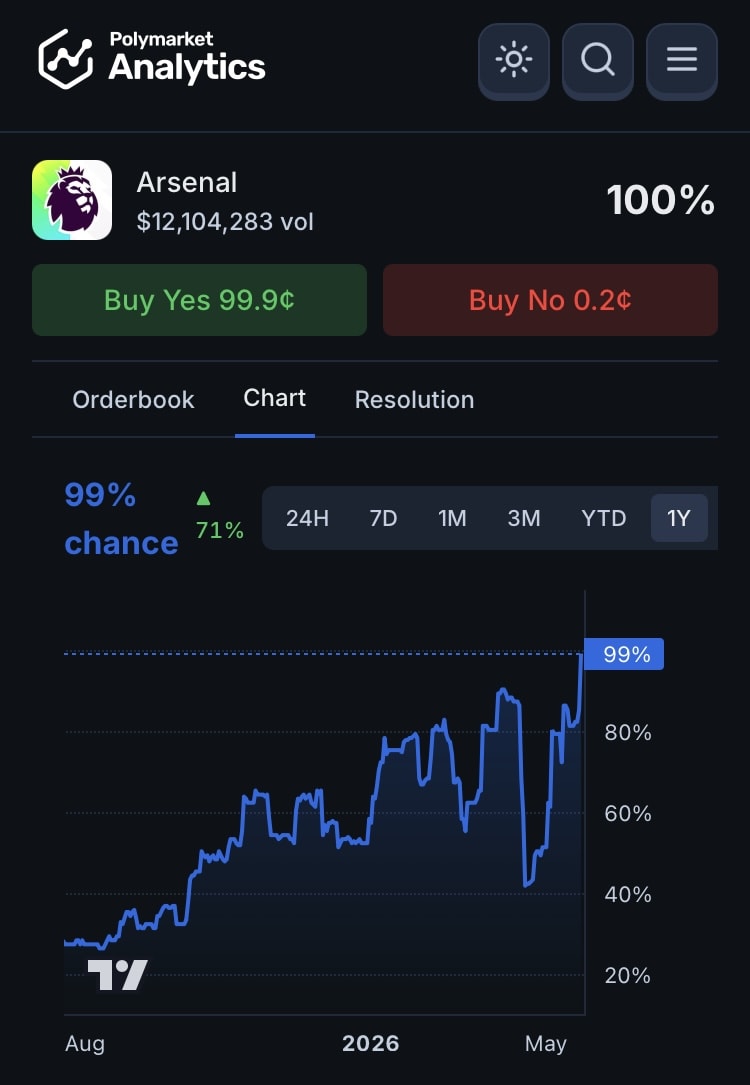
Pep Guardiola is first a dancer, second Mourinho’s nemesis, and third a genius endlessly troubled by the impossibility of the game he loves providing him with the control he craves.
Mikel Arteta, Pep’s disciple, is first and foremost a sicko.
There’s all sorts we can learn from these two madmen and their race for the title, starting with how everything is a tradeoff. When you start looking at your favourite game as a short blanket, always forcing the choice between a cold head or cold feet, it makes more sense.
Despite the best efforts of the just try harder and be better at everything crowd, the same goes for the workings of the “real world”. Few easy fixes. No free lunch.
If you’ve been enjoying the Blog, please consider subscribing via Substack! No slop, no spam, and it really helps with the wretched algo, and therefore with the impact. (Nothing at all to do with my ego you understand.)
At long last, a way to save lives cost-effectively and get your name on the building.
A younger me was on record saying he’d sooner sit in a bath of beans than run a marathon. Sacrificing a portion of dignity still seems preferable to sacrificing both knees. These days, though, I’m more based, so I’m putting something more precious than my knees or my dignity up for sale to the highest bidder.
Blind auction. All proceeds to GiveWell. Deadline day Sunday, 26 April.
Does exactly what it says on the tin.
And in the process explains how our best and brightest consultants naming F1 fantasy teams after their employer proves we need regulation of AI right now.
Thanks for reading, and especially for commenting!
There are a few reasons for training on golf:
Biographical. I was introduced to golf as a teenager, not chess, and I spent thousands of hours since then playing and watching it. Maybe there are stories like Rory’s in chess, grand masters who persevered through a decade of struggle to overcome the odds and themselves, in which case I’d like to read those stories too.
Social. As far as I can tell Rory is much more famous than any chess player, and therefore faced greater social pressure to perform. Stress does strange things to us, and it’s useful to study people in high-stress environments. (And I expect his fame makes his story more likely to get clicked on, which also helps if your goal is to be an on-ramp.)
Environmental. There are some “real life” environments more like chess, and there are some “real life” environments more like golf. One difference is the highly chaotic nature of golf. It isn’t amenable to being solved algorithmically, at least not with the algorithms we currently have. Imperceptible differences in stance, swing, contact, and so on and so on, can be the difference between a slice, a hook, or a peach. (And how you get from conscious thought to motor control via the nervous system is its whole own thing.) Its vagaries are one reason why in some important respects it’s a more accurate model of the hardest problems we face than chess is, and why it’s a better teacher even than other sports of the humility, patience, and self-acceptance we’ll need to solve those problems.
This is art.
Saudi Arabia are also trying to buy Mo Salah, which I only realize is an EA tie-in now—after having written a personal essay about all the counterfactual lives he saved. Thank you for joining the dots.
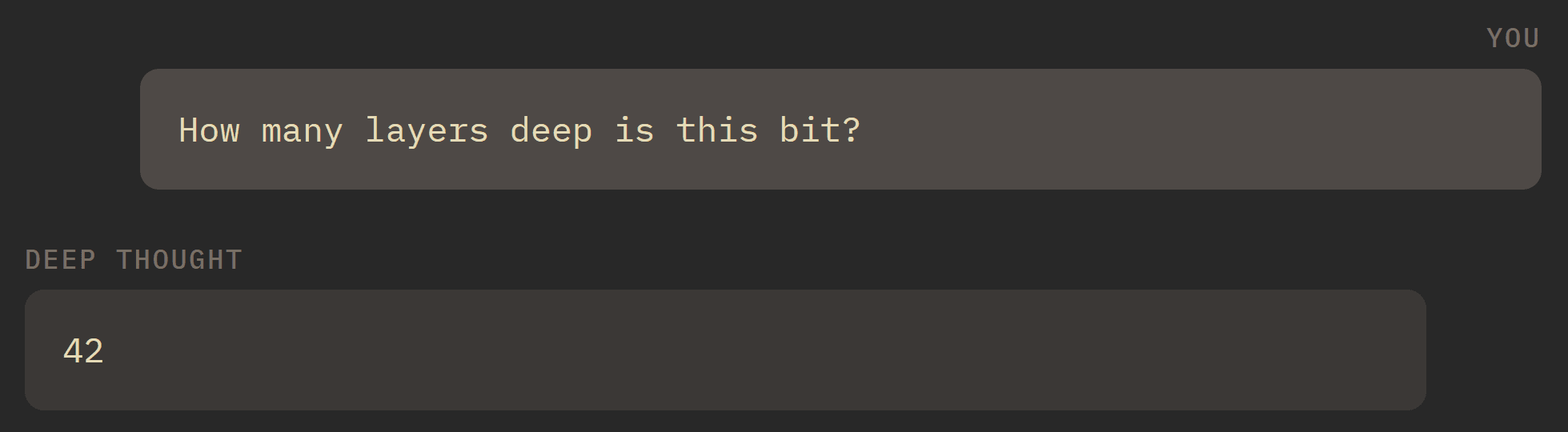
The layers! I promise you this is the question I asked before I knew this bit of the bit:
There’d better be a Mirrorball
Crossposted from Mirrorball, the EA sports blog.
If mirrorballs are anything, they’re many things masquerading as one thing. And if all goes to plan, this Mirrorball will be no different.
Practically, this Mirrorball is a new name for the Blog formerly known as The 1001.
Spiritually, this Mirrorball is Alex Turner’s wish as my command.
Memetically, this Mirrorball is Moneyball in reverse.
We need models of the past to understand the present, and models of the present to predict the future. Moneyball is the story of sporting decision makers making better decisions after they got religion and let themselves learn from analytical models of their games, models often born far afield in finance and suchlike before being given new life by blogosphere passion projects.
According to me, sport actually is the most important of the least important things because it’s itself a model of “real life”. Being right is not enough. Everything’s a tradeoff. Success is a mess.
We can have all sorts of fun picking apart sport’s rigour and its glorious randomness. Its competitions and complex collaborations. Its regulations and unwritten rules. Its ingenious and idiotic strategies. And while we’re at it, we can increase our chances of improving the outcomes that matter most.
Auctioning off a month (or three) of naming rights to the Blog earned £1001 for GiveWell’s top charities. That’s the best part of seven years of an infant’s life to you and me, at £150 a pop. That would have been worth me living a lot longer with a given name a lot worse than The 1001. That name, though, for all that I became very attached to it, and despite my best efforts retrofitting its origin story, had the fatal flaw of not telling anybody anything about what the Blog’s about.
The renaming process was art and science. Art: writing down as many sporting terms as one man’s mind can conjure and free associating from there, producing a list more than 230 names long. Science: developing a scoring rubric and assigning points for legibility, territory, tone, thesis, and, of course, layers, producing a top tier of half a dozen. Philosophy: staring at the top tier long enough that name by name each reveals itself to be intolerable, all bar one, and that’s a bingo.
Come for a swift half or two in the new clubhouse (www.mirrorball.blog), stay after hours for the same old yarns about how, if you look at it right, sport really is a matter of life and death.
And the dancing. Stay for the dancing.
Subscribe for free via Substack to get Mirrorball posts direct to your inbox. No slop, no spam.